














Summary
Santo Domingo. - The general director of the Dominican Institute of Civil Aviation, Idac, affirmed that the open skies policy implemented by the country has allowed a decentralization of the national aeronautical market, facilitating the entry of new airlines that compete for the main points and destinations at the passenger and cargo level.
Santo Domingo. – The general director of the Dominican Institute of Civil Aviation, Idac, affirmed that the open skies policy implemented by the country has allowed a decentralization of the national aeronautical market, facilitating the entry of new airlines that compete for the main points and destinations at the passenger and cargo level.
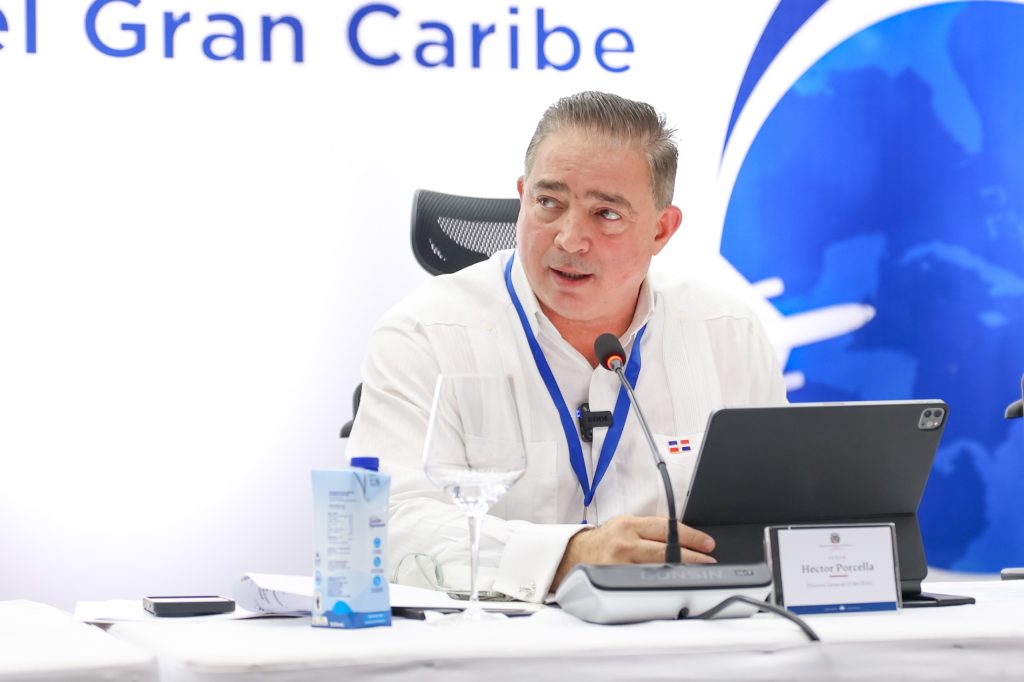
Hector Porcella indicated that within the framework of this policy, the government of President Luis Abinader has granted facilities to national and international airlines to improve connectivity with the rest of the world and make possible a substantial increase in the number of seats in the Dominican aeronautical fleet.
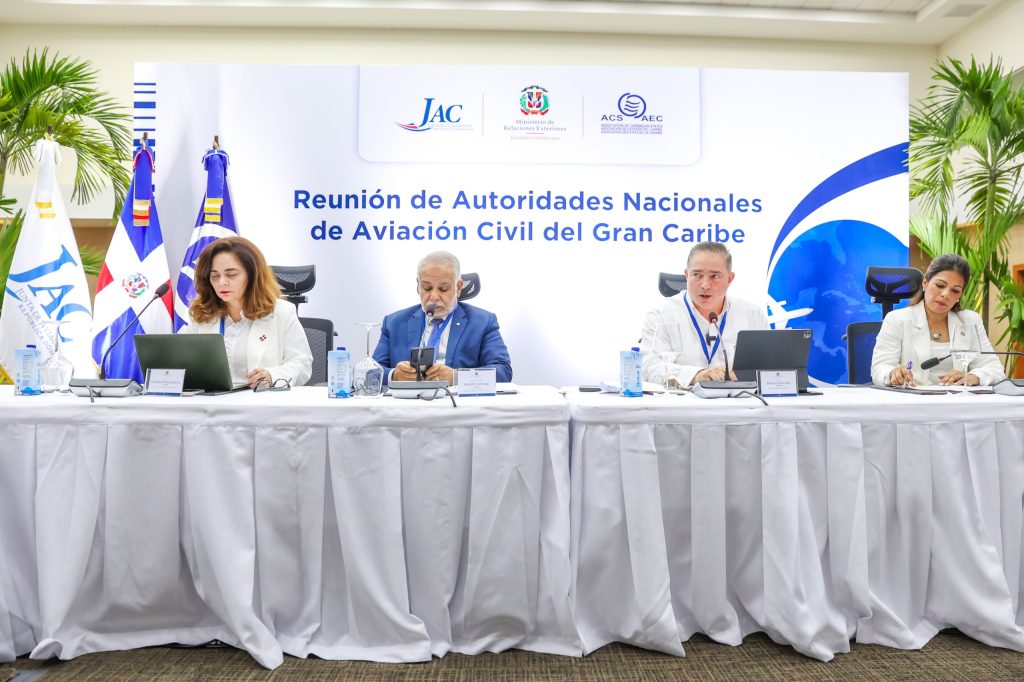
Porcella, who will take over as the new president of the Civil Aviation Board on August 16, shared the information during his participation as moderator in the First Meeting of National Civil Aviation Authorities of the Greater Caribbean and Representatives of Airlines, held at the Convention Center of the Ministry of Foreign Affairs.
The opening day of the event included the participation of the Vice President of the Republic, Raquel Peña, who gave the opening speech; the Minister of Foreign Affairs, Roberto Álvarez; the Minister of the Presidency, Joel Santos; the outgoing president of the Civil Aviation Board, José Marte Piantini; and the new general director of IDAC, Igor Rodríguez, who followed the day’s presentations with interest.
Referring to the impact of the liberalization policy of the Dominican aeronautical market, Porcella said that the country has implemented a firm strategy to promote and expand the open skies policy, which is based on the elimination of the capacity offered in frequency, type of aircraft, number of seats and cargo volume, based on market demand,” said the official.
He specified that, as part of the current strategy, the country is granting traffic rights of up to Sixth Freedom for passenger, cargo or combined flights, and Seventh Freedom in exclusively cargo operations. “This last modality with the objective of stimulating trade to and from the Dominican Republic,” said Porcella.
He explained that as part of the interest in promoting the development of national civil aviation, the different actors of the Dominican State are making the effort to generate a shared vision that will result in a greater opening of its Air Transport Policy.
The weight of cargo transport
Porcella highlighted that, during the months of total confinement caused by the last pandemic, specifically between March and June 2020, air cargo became the main source of income for most airlines worldwide.
“In that terrible year, the global air cargo industry generated 129 billion dollars, representing approximately one third of the total income of airlines and an increase of 10% to 15% compared to pre-crisis levels,” adding that in the Dominican Republic “almost 7 million kilograms of merchandise were transported on average during those critical months, both in exports and imports. “In 2021, imports showed a full recovery in December, compared to the same month in 2019.”
He said that currently, the country has 71 instruments and protocols, divided between Air Service Agreements and Memoranda, as well as multilateral agreements within the scope of international organizations such as the Latin American Civil Aviation Commission, Clac, and the Association of Caribbean States, ACS.
He said that air liberalization has allowed the Dominican Republic to have five national airlines today that are operating international flights under the RAD-121 aeronautical regulation, which means that they use aircraft with the capacity to transport more than 30 passengers.
These lines are Arajet, S.A.; Sky High Aviation Service Dominicana S.A; Air Century, S.A.; Red Air S.A. and Sunrise Airways Dominicana S.A.
He pointed out that, in line with the policy adopted by the Dominican Republic, the Latin American Civil Aviation Commission, Clac, proposed the signing of a Memorandum of Understanding for the temporary granting of the exercise of seventh freedom air traffic rights for exclusively cargo flights.
According to Porcella, through the exercise of seventh freedom air traffic rights, regular and non-regular cargo services are reciprocally permitted to airlines of the signatory countries or those that sign said Memorandum of Understanding, under equal opportunities and conditions, without restrictions or limitations.