













Montreal, Canada.- The Dominican Institute of Civil Aviation, Idac, spanish: Instituto Dominicano de Aviación Civil, and Civil Aviation Institute of Cuba, Iacc, spanish: Instituto de Aeronáutica Civil de Cuba, agreed to elaborate an action plan to reduce the Carbon dioxide emissions, CO2, from international aeronautics activity promoting the sustainable fuel use to aviation.
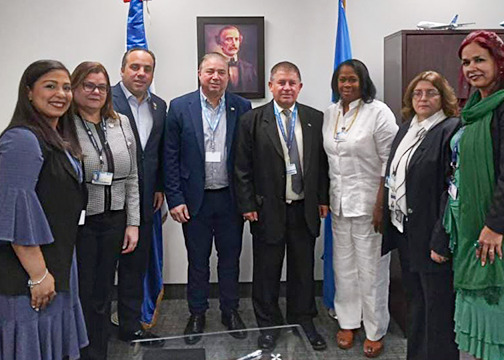
Héctor Porcella, Idac’s interim general director; and Armando Daniel López, Iacc bearer, formalized a protocol for that purpose in the frame of the International Civil Aviation Organization, general assembly, Icao, held in Montreal, Canada with the participation of 193 members states.
Pursuant the agreement the two Antilleans countries agree to develop training programs, visits, relevant information interchange, technical meetings and collaboration workshop to the implementation of an oriented plan to mitigate the impact of carbon monoxide in aviation field.
Porcella explained that the Dominican Institute of Civil Aviation will share with its cuban similar some of the progress made in the applied programs in the country to reduce the CO2 carbon footprint to accelerate the adoption of sustainable fuel.
Icao, accepting the recommendations of the scientific community, advocate for the use in this type of fuel, because they have the potential to reduce the carbon dioxide emissions up to a 80 per cent.