


















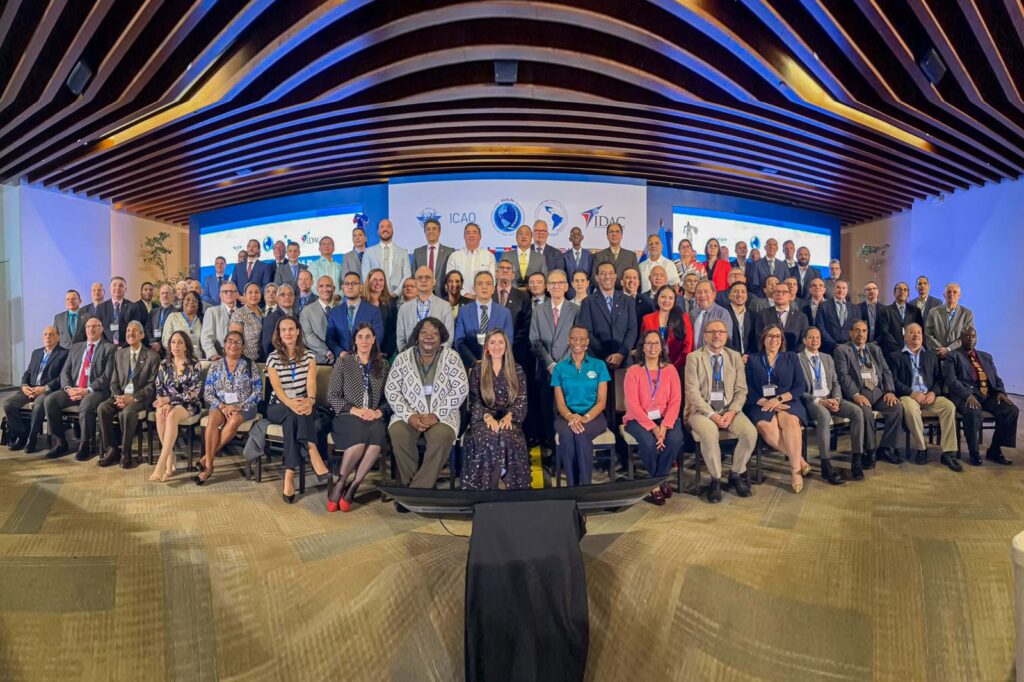
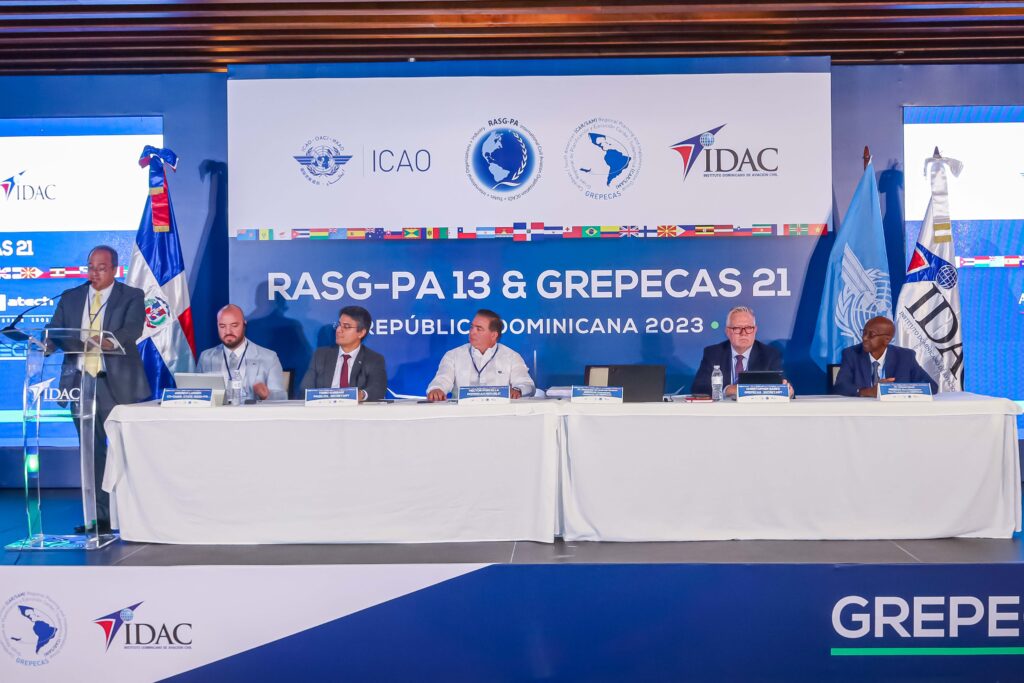
Alessander de Andrade Santoro, Fabio Rabbani, Héctor Porcella and Christopher Barks identify commitments and priorities to improve management and face the challenges of growth
Santo Domingo, Dominican Republic. During the meeting held this week in the Dominican Republic as host country, the president of the Regional Planning and Implementation Group of the Caribbean and South America (Grepecas), Alessander de Andrade Santoro, expressed confidence that the discussions of important issues relating to commercial aviation in the Caribbean Region , Central and South America, will lead to achieving benefit objectives for the member states of the group it represents and the Regional Planning and Execution Group (Rasg-pa).
“Right now, it is up to us to make our contribution, and for this reason we are fully dedicated this week to exchange ideas and looking for innovative solutions in different areas, such as operational security, Cns, Atm, Aim, Met, Aga, Sar, Atfm and several others, seeking alignment with Gasp/Ganp and Asbu, so that all countries can follow the necessary developments taking into account emerging technologies, new aviation actors, as well as the environment and cybersecurity,” said Santoro.
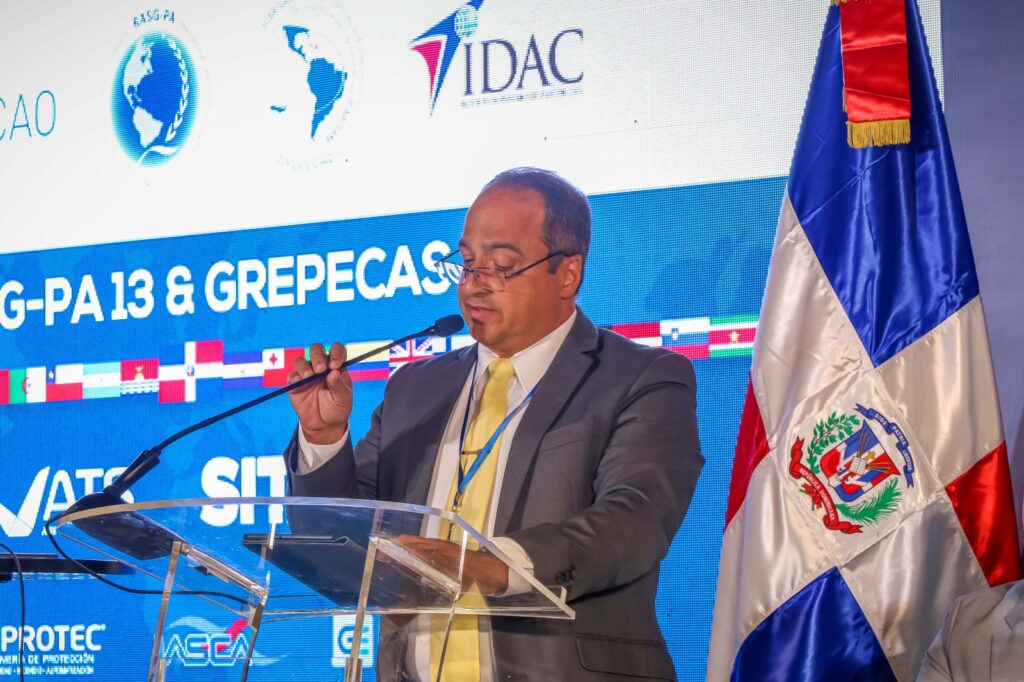
He added that. although it will not be an easy job, due to the number of topics that are discussed during the different sessions, he is confident that together, in coordination, with the support and active participation of everyone in a synergistic process, they will close the week’s achievements, laying a brick more in the structure of the future of flights in the skies of our regions.
“I tell you, ladies and gentlemen, that it is an honor to preside over Grepecas, which is surely a group of excellence and I wish you all an excellent week of hard work at the Third Grepecas-Rasg-pa Joint Meeting and at the Twenty-First Meeting of the Regional Group of Planning and Execution Caribbean and South America”.
Fabio Rabbani defines planning as an indispensable tool
Likewise, Fabio Rabbani, secretary of the Regional Planning and Execution Group (Rasg-pa) and Regional Director of the South American Regional Office (Sam) of the International Civil Aviation Organization (Icao), defined planning as the indispensable tool to improve the management of the air navigation system in the current stage of recovery of the aviation industry, with growth horizons.
Rabbani said that at a time of aviation recovery, the bodies responsible for the sector must face challenges such as the use of technology for the efficient management of air navigation services and airspace, in addition to the growing flow of new users, given which planning will be essential to achieve the required efficiency and the objectives set.
By participating in the opening ceremony of the Grepecas work, together with representatives from 12 countries gathered in Santo Domingo, the Brazilian expert in aeronautical management proclaimed the commitment of the Secretariat of the specialized organization to continue working to advance Planning and to strengthen relevance of the Regional Air Navigation Plan.
He pointed out that Grepecas must also reinvent itself, adapt to the times of information technology and optimize plenary times so that the group meets its objective. “That is why, in this meeting, work tables will be included on very important topics, where the involvement of States, service providers and industry will be very relevant to obtain valid conclusions for planning,” Rabbani stressed.
Porcella is committed to development and modernization
The general director of Idac, Héctor Porcella, also participated in the opening ceremony, and anticipated that the Grepecas technical event, like the one initiated the day before by the Pan America Regional Operational Safety Group Rasg-pa, will contribute to the development and modernization of civil aviation in each of the States represented and to increasingly raise the level of compliance with the Icao Standards and Recommended Practices.
“Monitoring the current implementation status of Air Navigation Services, Aviation Safety, Operational Safety Surveillance and environmental conservation in the Car/Sam Regions constitutes a key factor for achieving the stated objectives in the Programs and Projects of the Rasg-pa and Grepecas Regional Groups,” said the Dominican official, who added that “the work that we will be doing this week will have a positive impact on the conditions in which aviation support services are provided in each of our States, both in improving the capacity and efficiency of air navigation. as in the economic development of air transport, and in the protection of the environment against the harmful effects of Co2 emissions produced by the aeronautical industry, among other no less important aspects.
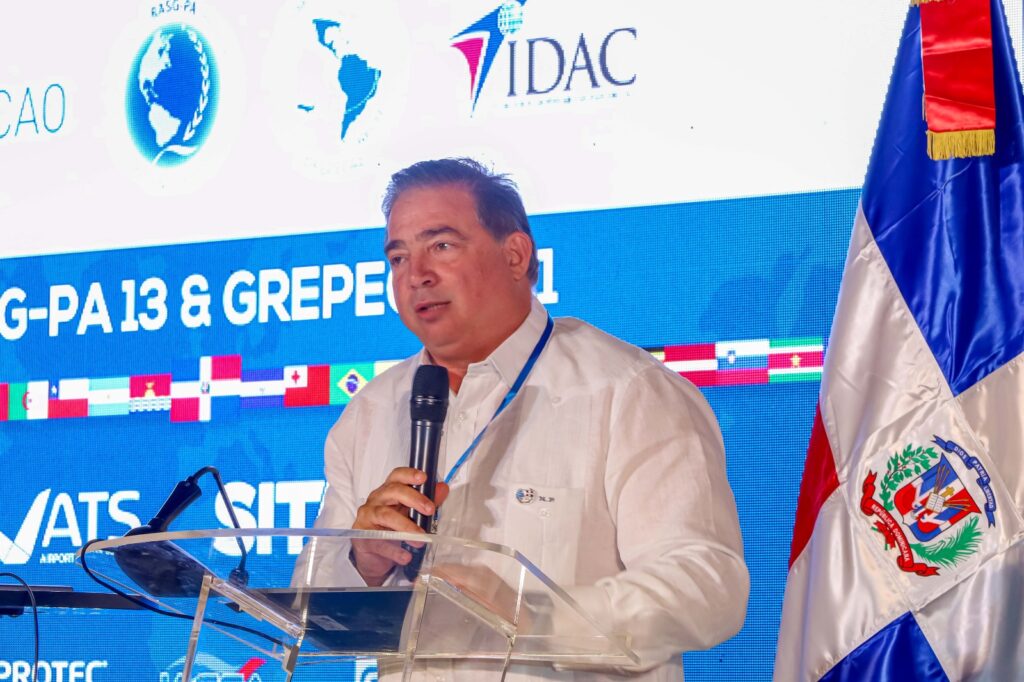
He thanked the members of the regional groups, each from their area of specialty, for giving their best “to contribute to the success that little by little we have been achieving, as verified by the Grepecas Programs and Projects Review Committee.”
He said he hoped that “this meeting will serve as a platform to consolidate all the measures aimed at obtaining the material elements that will allow us to conclude the plans that are still in progress; and to strongly support its implementation.”
Barks advocates for more unity between States and Industry
Christopher Barks, secretary of Grepecas and regional director of the Icao Regional Office for North America, Central America and the Caribbean (Nacc), highlighted that after the impact of the pandemic, the Pan American region is the one with the highest level of recovery worldwide, evidenced by the number of air operations currently achieved, a number even higher than 2019 in this part of the Caribbean. “However, we have certain clear areas in which the recovery and especially air connectivity has not yet achieved the same levels as the rest of the region,” he noted, adding that “this combination of challenges with an outstanding growth in air traffic and the need to improve air connectivity leads us to implement more effective and efficient solutions, with more effective regional collaboration arrangements and more timely agreements to support each other with the implementation.” of air navigation services between States, users and industry.
He indicated that the adequate implementation of the airspace, the updating of the air navigation services infrastructure and its optimization, as well as the support for improvements at the airport level, would be part of the offer of topics for discussion and agreement to continue promoting the operational improvements contemplated in the Global Air Navigation Plan (Ganp) and their impact on safety with the Global Aviation Safety Plan (Ganp).
He proposed that States and the industry take a proactive role in the preparation of Grepecas corresponding to the next Air Navigation Conference, to be held in Montreal in 2024, which he defined as a primary task for the group meeting in Santo Domingo. He considered that collaboration between States with Icao and other international civil aviation entities is key, especially when there are differences between States in terms of size and resources, and air transport is an essential factor for socioeconomic development.
“The work carried out as a regional collaboration between the States, all together as seen in the regional Telecommunications networks – Reddig and Cansnet, and the Air Traffic Management (Atm) route structure for the Free Route airspace, ensure the safety performance and efficiency of regional air transport, and are bearing fruit in different areas, showing a constant and outstanding recovery in air operations and sustainable compliance with Icao Standards and Recommended Practices (Sarps),” he noted. Christopher Barks.
Also speaking at the ceremony were Andrew Larsen, Co-President, States, of Rasg-pa and Orlando Nevot, vice president of Grepecas.