


















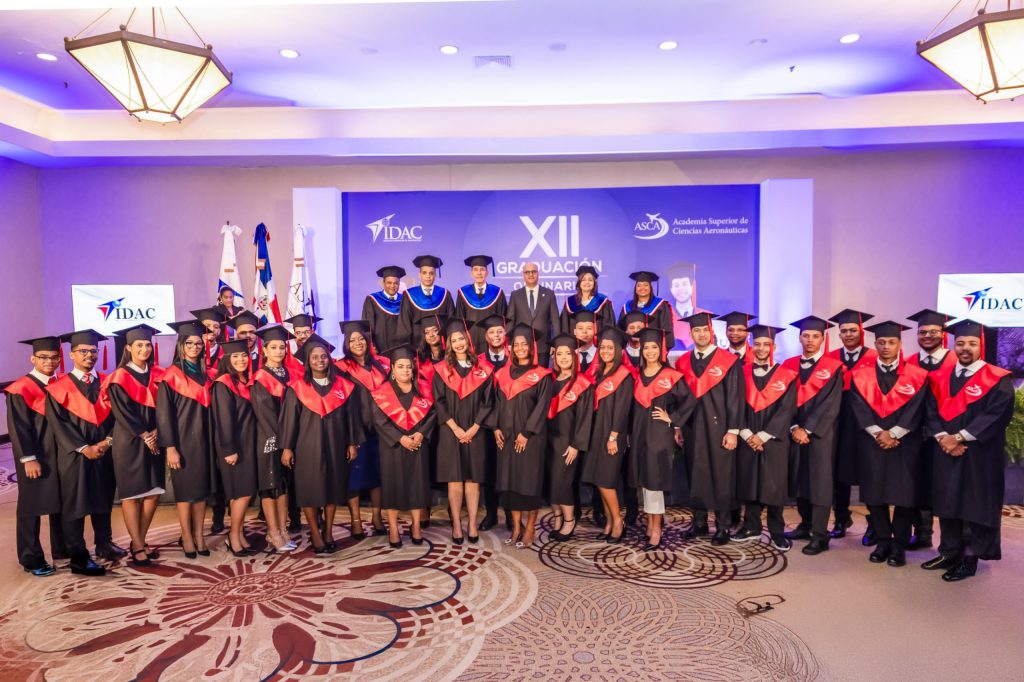
Santo Domingo.– The Higher Academy of Aeronautical Sciences, Asca, a specialized training body of the Dominican Institute of Civil Aviation, Idac, celebrated its Twelfth Ordinary Graduation, in which 29 new professionals were graduated in the career of Higher Technician in Aeronautical Administration.
As Asca is the first institution of higher education to offer this specialty in the Dominican Republic and which, at the same time, integrates training with the highest levels of excellence, it intends, within its mission role, to meet the demand for qualified technicians for the entire aeronautics sector.
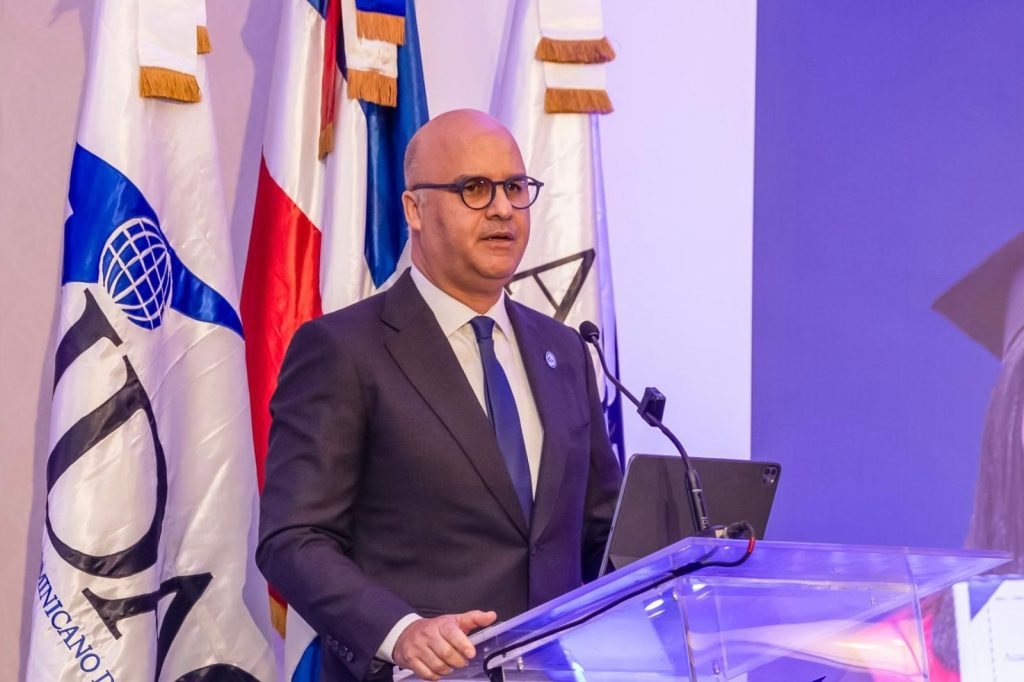
The general director of Idac, Igor Rodríguez, who led the graduation ceremony, motivated the new technicians to continue preparing to always achieve excellence, no longer as students, but as the professionals who will stand up for the institution, for the country and for the aeronautical system.
“The Dominican Institute of Civil Aviation, Idac, through this academy, has become a fundamental pillar for the training of professionals who not only meet the highest quality standards, but also carry with them an innovative and responsible vision in the management of aeronautical resources,” said Rodríguez.
The head of Idac added that the entry into force of the Open Skies Agreement in 2025 will be a turning point for civil aviation in the Dominican Republic, as far as he understands. The country is facing a scenario where the demand for qualified personnel will grow exponentially and he was confident in expressing that graduates are prepared to take on this challenge.
“The world of aviation is constantly evolving and our duty, as an industry, is to anticipate these changes and live up to the demands that come with them. Aviation, in the Dominican Republic, is a fundamental axis for the development of tourism and the economy. Our country, known for its beauty and hospitality, should also be recognized for the efficiency and safety of its skies,” he said.

The director of Asca, Clara Fernández, also expressed herself, who based her speech on the opportunities that graduates will have in the labor market from now on and was confident about their abilities and the preparation they have, which will serve them when it comes to testing their competitiveness.
“Asca is committed to creating competencies in the New Generation of Aviation Professionals that facilitate the proper implementation of international civil aviation standards to guarantee Operational Safety, equipping them with the techniques and tools to thrive in the innovative world of aviation, supported by updated theoretical-practical programs.”
The three students with the highest academic indexes of the class were Felipe Nerys Díaz Santana, Summa Laude, with 3.85; Christy Angelina Hernández, Summa Laude, with 3.84 and Emily Marie Báez, Summa Laude, with 3.75 points. The speech on behalf of the graduates was given by the former, who also received the graduation ring from the Asca, as a reward for his effort.
In the same order, the general director, Igor Rodríguez, announced that the three meritorious graduates become part of the Idac family, immediately integrating them into the labor force and opening the possibility for two more positions, of the 14 graduates who obtained academic honors, to be collaborators of the institution and continue their more advanced preparation inside or outside the country.
“We chose this career because we are driven by a real commitment to contribute to an industry that connects the world. During this time, we not only acquired technical knowledge, we also understood the importance of teamwork, safety and efficiency that each process must entail. We are starting a new stage in which we take with us the knowledge and full certainty that the success of this industry depends on committed people,” said Díaz Santana.
The ceremony of the Twelfth Extraordinary Graduation of the students of the Higher Technical Degree in Aeronautical Administration, in addition to the general director of Idac, Igor Rodríguez and the director of the Asca, Clara Fernández, was attended by the Minister of Higher Education, Science and Technology, Mescyt, Franklin García Fermín.
The head of Mescyt said: “This academy has the fundamental purpose of developing specialized academic programs and continuing education, it has a virtual platform available online classes and also in person. He has fulfilled the formative process of this pleiad of young people in their learning phase”.
In addition, the faculty was made up of Milvio Pérez, in charge of the Aeronautical School; Gerónimo Vargas, in charge of the Asca Registry and Marisela Orozco, in charge of Admissions of the academy.
To date, 187 professionals have graduated from the Higher Technician Career in Aeronautical Administration, playing a key role within the sector with competencies that are recognized both nationally and internationally. The Asca also teaches the career of Senior Technician Air Traffic and Aerodrome Controller.
Its academic mission is developed through two main pillars: as a regional center of excellence in instruction, accredited by the International Civil Aviation Organization, Icao, under the Trainair Plus program and as a higher technical institute accredited by the Ministry of Higher Education, Science and Technology, Mescyt.
Asca is one of the first institutions enrolled in the platform of the National Information System of Higher Education, Science and Technology, Siniescyt, of Mescyt for the issuance services of academic documents and statistics, in line with the Digital Agenda promoted by President Luis Abinader to achieve zero bureaucracy.
The graduation ceremony was also attended by the deputy director general of Idac, Paola Aimée Plá Puello; Miguel Mejía, deputy director; José A. Cancel, Deputy Minister of Administrative and Financial Affairs of Mescyt; José Ramón Holguín, rector of the Technological and Community Institute; Mónika Infante, executive director of Aeropuertos Dominicanos Siglo XXI (Aerodom); directors and heads of areas of Idac, special guests, relatives and friends of the graduates.